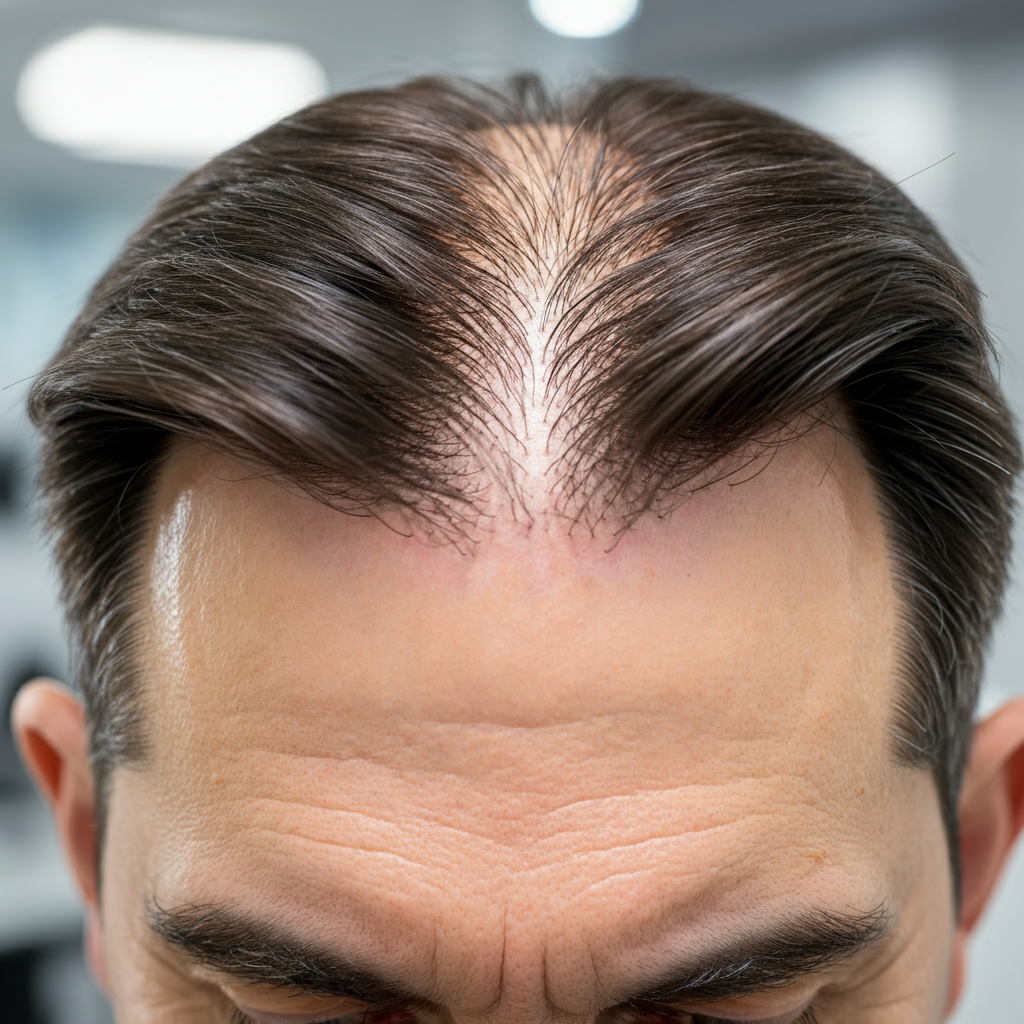
Hair loss is a common concern, prompting many to search for a way to reverse the process. A central question in this search is whether it’s possible to bring dead hair follicles back to life. While the internet is full of supposed miracle cures, the scientific answer is nuanced. It depends entirely on whether a follicle is truly dead or simply dormant.
The Quick Answer
In short, no—you cannot regrow a truly dead or destroyed hair follicle. If a follicle is fibrosed, scarred, or has completely vanished, it is gone for good. However, many people confuse dead follicles with dormant ones. Dormant follicles are still alive but have stopped producing hair. These can often be stimulated to start growing hair again with the right approach.
Understanding the difference between these two states is key to setting realistic expectations and choosing an effective strategy for hair restoration.
Disclaimer: This article is for informational purposes only and does not constitute medical advice. Please consult a qualified healthcare professional or dermatologist for personalized diagnosis and treatment.
The Science of Your Hair Follicles
To understand hair loss, we first need to understand how hair grows. Each hair on your head grows from a hair follicle, a tiny, tunnel-like structure in the outer layer of your skin. A healthy scalp contains around 100,000 hair follicles.
The Hair Growth Cycle
Hair growth is not a continuous process. Each follicle cycles through four distinct phases:
- Anagen (Growth Phase): This is the active growth phase, where cells in the follicle’s root divide rapidly to create new hair. Hair in this phase grows about half an inch per month. This phase can last anywhere from two to seven years.
- Catagen (Transition Phase): A short, transitional phase lasting about 10 days. The hair follicle shrinks, and hair growth slows as the hair detaches from its blood supply.
- Telogen (Resting Phase): The follicle is completely at rest for about three months. While the old hair is resting, a new hair begins the growth phase beneath it.
- Exogen (Shedding Phase): This is the end of the telogen phase, where the old hair sheds from the scalp. It’s normal to lose 50 to 100 hairs per day as part of this natural cycle.
In conditions like androgenetic alopecia (male or female pattern baldness), the anagen phase becomes progressively shorter. The follicle also miniaturizes, or shrinks, producing finer and shorter hairs until it eventually stops producing hair altogether, entering a dormant state.
Dead vs. Dormant Follicles
- Dormant Follicles: These follicles are still alive and connected to a blood supply but are not in the anagen (growth) phase. They are essentially sleeping. With many types of hair loss, follicles can remain dormant for years before becoming non-functional. These are the primary targets of most hair loss treatments.
- Dead Follicles: In certain conditions, like scarring alopecias (e.g., lichen planopilaris) or from physical trauma like burns, the follicle is permanently destroyed and replaced by scar tissue. Once this happens, the structure is gone, and it can no longer produce hair. No current non-surgical treatment can regenerate a follicle that is truly dead and fibrosed.
What Works: Reviving Dormant Follicles
Science has confirmed several methods for waking up dormant follicles and improving hair density. These treatments are most effective for non-scarring alopecias like androgenetic alopecia.
FDA-Approved Treatments
- Minoxidil (Rogaine): This over-the-counter topical treatment is thought to work by widening blood vessels, increasing blood flow to the follicles. It also helps to shorten the telogen (resting) phase and push follicles back into the anagen (growth) phase. It is effective for both men and women but requires continuous use to maintain results.
- Finasteride (Propecia): An oral prescription medication for men, finasteride works by blocking the enzyme that converts testosterone to dihydrotestosterone (DHT). DHT is the primary hormone responsible for follicle miniaturization in male pattern baldness. By reducing DHT levels, finasteride can halt hair loss and, in many cases, promote regrowth from dormant follicles.
Medical Procedures and Therapies
- Platelet-Rich Plasma (PRP): This procedure involves drawing your own blood, concentrating the platelets, and injecting the resulting platelet-rich plasma into the scalp. Platelets contain growth factors that are thought to stimulate dormant follicles and encourage cell repair. Evidence is promising, but results can vary.
- Low-Level Laser Therapy (LLLT): LLLT devices, available as caps or combs, use red light to stimulate cellular activity within the follicles. The theory is that this energy boost can prolong the anagen phase and increase hair density. It’s considered a safe but moderately effective option.
- Microneedling: This involves using a device with fine needles to create tiny, controlled punctures in the scalp. This micro-injury triggers the body’s natural wound-healing response, which releases growth factors and can stimulate dormant follicles. It’s often used in combination with topical treatments like minoxidil to enhance absorption.
Hair Transplants
For areas with truly dead or non-responsive follicles, a hair transplant is the only proven solution for restoration. Surgeons harvest DHT-resistant follicles from the back and sides of the scalp and transplant them to balding areas. This doesn’t regrow dead follicles—it replaces them with healthy, functioning ones.
What Likely Won’t Work
Many products claim to “unclog” or “revitalize” dead follicles, but these claims are not supported by science. Special shampoos, scalp scrubs, and essential oils might improve scalp health, but they cannot regenerate a fibrosed follicle. Be wary of any product that promises to bring back hair from a completely bald, smooth scalp where follicles have been gone for many years.
The Future of Hair Regrowth: Emerging Research
While we can’t regrow dead follicles today, scientific research offers hope for the future. Scientists are exploring ways to achieve true follicle neogenesis—the creation of brand new follicles.
- Stem Cells: Researchers are investigating how to use stem cells to regenerate follicles. Early-stage studies have shown some success in animal models, but this technology is not yet ready for human clinical use.
- Wnt Signaling: The Wnt signaling pathway is a crucial communication network between cells that plays a major role in hair follicle development and regeneration. Manipulating these signals could potentially coax the skin into forming new follicles.
- 3D Printing and Follicle Cloning: Another futuristic approach involves “hair cloning,” where a patient’s follicle cells are multiplied in a lab and then implanted back into the scalp. 3D printing could be used to create a scaffold to guide the growth of these new follicles.
These areas are exciting, but it will be many years before they become safe, effective, and widely available treatments.
When to See a Dermatologist
If you are experiencing hair loss, it’s best to see a board-certified dermatologist. A professional can properly diagnose the cause of your hair loss—whether it’s genetic, hormonal, autoimmune, or due to a nutritional deficiency. They can examine your scalp to determine if your follicles are dormant or gone and recommend the most effective, evidence-based treatment plan for your specific situation.
A Balanced Takeaway
The ability to regrow hair hinges on the health of your follicles. If they are dormant, you have several scientifically-backed options—from FDA-approved medications to medical procedures—that can successfully awaken them and restore hair growth. The key is to act early, as the longer a follicle remains dormant, the harder it can be to reactivate.
However, if your follicles are truly dead and scarred over, no current non-surgical treatment can bring them back. In these cases, a hair transplant is the most viable path to restoration. As you explore your options, focus on proven science and consult a professional to create a realistic and effective plan.
Frequently Asked Questions (FAQs)
Q: How do I know if my hair follicles are dormant or dead?
A: A dermatologist can help determine this, often using a tool called a dermatoscope to magnify the scalp. Generally, if you see tiny, fine “peach fuzz” hairs, the follicles are likely dormant. If the scalp is completely smooth, shiny, and without pores, the follicles may be gone.
Q: Can stress cause follicles to die?
A: Severe stress can cause a condition called telogen effluvium, where a large number of follicles enter the resting phase at once, leading to widespread shedding. However, this condition does not kill the follicles. Once the stress is managed, the follicles typically return to the growth phase.
Q: Do vitamins or supplements help regrow hair?
A: If your hair loss is caused by a specific nutritional deficiency (like iron or vitamin D), supplementing can help restore normal growth. For genetic hair loss, nutraceuticals may support overall hair health but are not a primary solution for reviving dormant follicles on their own.
Q: How long does it take to see results from treatments like minoxidil?
A: It typically takes at least three to six months of consistent daily use to see noticeable results from minoxidil or finasteride. Results peak around one to two years and require continuous use to be maintained.